Showing posts with label sections. Show all posts

April 10, 2012

UPDATE to Blog Post 5 and the Final Project!

The class has agreed to change up (and hopefully make easier) the rest of the semester.

First, instead of your Blog Post 5 (Deviance Debate) we will be having an in-class debate on April 24th. Blog Post 5 is worth 20 points. Those points will now be earned in the following way:
  • 5 points: Submit a potential debate topic, on Angel (see the "Deviance Debate" folder under the Lessons tab). Nominate a topic--one of the suggestions, or one of your own making--and briefly explain what you feel are the two "sides" of the debate we should take on. This is due Wednesday, April 11th by midnight and is available now.
  • 5 points: After I get all of the submissions, I will choose the top 5, and put them in the same folder on Angel, as a survey. You will need to vote for your top choice, out of those five.
  • 10 points: On the day of the Deviance Debate (April 24th) you will bring your arguments, ready to debate, to class. I will give you a handout in advance. You should have two solid arguments for each side, so four arguments total. If you are uncomfortable speaking in front of class, do not worry--your "side" will nominate spokespeople to represent that side of the argument.

As you can see, the total will be 20 points, so our grading scale will stay exactly the same. Still, this is a slight change to the syllabus. One that probably works to your advantage, in most cases. If you are uncomfortable with this in any way, please let me know as soon as possible.

Second, the Final Project will now be due April 29th. This gives you one more week. Remember that for the Final Project you are expected to expand upon your favorite blog post or posts, making them into a substantially different project than you originally had. You can expand one blog post, or combine two or three--you just need to make sure you are doing more than copying or pasting, as this is considered plagiarism (yes, you can plagiarize yourself).

Final Projects can be in the format of a Blog Post, or a traditional paper. If you go one of these routes, your final product must be between 2000 and 3000 words.

You also have a creative option, INSTEAD of writing a paper or Blog Post. You may make a video, a podcast, or a presentation--I am also open to other options. Please let me know by next Thursday (4/19) so I can make the schedule for April 26th. These should be 5 to 8 minutes long (or the equivalent, based on the format you choose). Talk to me if you have any questions.

April 5, 2012

Section 5 :: Deviant Behaviors Part II (April 10 – April 24)

NOTE: We are discussing body modification on April 19th. Do you have body modification? Are you willing to show and tell? If you are, please send me a photograph of your tattoo, piercing, branding or whatever body modification you have. Also tell me what it means to you, and/or why you got it. Also tell me if it is okay for me to use your name. If you do not want your identity known, no problem—just make sure we can’t tell from the photo. Please send these to me by April 15th (Taxes and tattoos—you can remember that, right?).

April 10th is the day we will be discussing non-vanilla sexual behaviors. Are you not sure what that means? You will want to be there, for sure! Remember you need to have your Homework 4 handout ready to turn in. If you don’t have that, email me ASAP to get one.
For today, come ready to talk about kinks and fetishes having read:

On April 12th, we will have the first of two days where we talk about same-sex sexuality and queerness. As I have touched upon in class, there is the behavior (same-sex sexuality) and the identities (lesbian, gay, bisexual, pansexual, queer, and so forth). As a deviance scholar, you know those are not the same thing. Until we give it a label, and a value judgment, it is just a behavior. If this seems hard to understand, look forward to the article by D’Emilio, when he talks about how the gay identity did not exist until the rise of capitalism allowed it to exist. The Schlatter and Steinback article takes on some of the common anti-gay myths you may have heard throughout your life. OK Cupid (yes, the dating site) takes it one step further, using data from their web site to answer questions about the LGBT visitors to their site (that’s the Rudder article). Once you’re done with all that reading, enjoy some Bisexuality Comics.
Optional:


On April 17th we will continue looking at queerness, and sexual identity. We will begin by looking at how heterosexuality became a sexual identity in a fascinating article by Katz. We will look at how complicated all this sexuality and gender stuff is with the short article about drag queens by Verta Taylor. We will question how useful “sexual orientation” is as a concept with a blog post by Lisa Wade. Then you get to see some photography from the Hide/Seek exhibit at the Smithsonian Institute’s National Portrait Gallery.

On April 19th, we will discuss at Body Modification. Is it deviant? What forms are deviant? Why do people get Body Modification? Is it a valid form of self-expression, or does it depend?
  • Read “Body Art, Deviance, and American College Students” by Koch and company. Available on Angel.
  • Read “Bodies of Change: A Comparative Analysis of Media Representations of Body Modification Practices” by Adams, also available on Angel.

You’re (WE are) almost done! On April 24th we will take on our last topic, Internet deviance. How has technology changed the way we do deviance? Is it ramping up deviance? Making deviance easier to find, or build community around? Should we fear technology as another way for some behaviors to flourish, or embrace it as a way to share common experiences? Do we need to worry about online predators? What do we have to do to protect the children?!?

We are DONE! :)

March 28, 2012

Blog Post 5: Deviance Debates

In this course, and in our lives, we are constantly hearing about controversies and arguments around deviance. Some of the debates are about whether or not an attribute or behavior really is “deviant” and some are about what rights people should have if they are labeled “deviant.” In each section of this course we have uncovered (or will uncover) ongoing questions that correspond to current social and political debates, including a few I list at the bottom of this post.

For your final Blog Post, you are going to take on a question of deviance, and explain the current debate on the topic. You can choose from the list below, or find something else that interests you. Choose a topic based on a realistic ability to do a fair treatment of the arguments in the space allotted. Feel free to email me or meet with me about your choice, if you want help brainstorming. After you choose a topic, pick two sides of the debate—even though many of these are far too complex for just two sides—and explain what you see as the most convincing arguments on each.

First, pick a question. Briefly explain why you chose the topic, and explain how it relates to the course. Next, briefly explain the THREE best arguments for EACH side of the debate (there will be SIX arguments total). Last, take a stand! Let me know where you fall in the debate, and why, firmly grounded in the concepts of this course, NOT personal experience or opinion. Remember, this is an academic analysis of arguments, not an editorial. Keep the tone and language scholarly throughout the entire post.

To find the arguments, cull through all of the chapters of the book, and class materials. Make sure you pull out everything we have used in lecture, and the readings—look back at the theories, and all of the concepts we’ve discussed. You may also want to read ahead if you see a future article that pertains to your topic. Also do outside research to make sure you are finding the best possible arguments. As with your other Blog Posts, you must integrate, explain, and fully cite at least THREE of the readings from the class above and beyond the citations for the outside sources of your arguments (unless the reading is the source of your argument). Be sure you properly cite each and every source—remember, if it isn’t a thought that originated in your brain, cite it! Try your best to rely on academic sources, and only use informal sources (such as blogs) when you must. When you do use other sources, make sure you cite them properly.

This paper should be 600 to 1500 words in length, NOT including the Works Cited at the end, and must be posted by 9:00pm on April 29th. Be sure to proofread carefully—spelling and grammar issues detract from the points you are trying to make. If you are unsure of your writing in any way, I suggest seeking help from the Writing Center. They will provide free proofreading help, and can give you tips for organizing your writing. Push yourself to produce a post you can be proud of!

Potential Topics (choose one, or come up with your own!):
  • Should intersex babies be surgically assigned a sex category at birth?
  • Should we have separate high schools for LGBTQ students?
  • Should sex work be legal?
  • Should/can the United States legally recognize more than two genders?
  • Should same-sex marriage be legal?
  • Should polygamy be legal?
  • Is the “gay panic” or “trans panic” defense legitimate?
  • How young is too young to make a transgender transition?
  • What should be the age of consent for sexual activity?
  • Should police be patrolling bathrooms for people having consensual sex?
  • Should LGBTQ issues be discussed in schools? If so, starting at what age? Or, what types of topics?
  • How should schools handle transgender students and bathrooms?
  • Should [enter group here] be labeled as deviant?
  • Should there be regulations about how deviant people are portrayed in the media?
  • What is the best way to change a social norm? Through the culture, or policy?
  • Should sex offenders have to register? Should any other type of crime have a registry, also or instead?
  • What can we do to ensure members of minority groups get fair treatment in the criminal justice system?
  • Should some groups get special treatment in the criminal justice system, given their systematic disadvantage?
  • Should there be more/less regulation on media and/or products around weight loss?
  • What accommodations should institutions have to accommodate different levels of ability?
  • What is an appropriate age for a person to get a cochlear implant?
  • How can bullying best be stopped?
  • Should self-harm be legal or illegal?
  • What should be the age of consent for body modification?
  • Should we be working to reduce the prevalence of eating disorders? If so, how?
  • Are some kinks or fetishes harmful?
  • How can we change the stud/slut double standard? Or should we?
  • What can we do to stop sex tourism? Or should we?
  • Should someone be able to amputate a healthy limb if they want? Should they have to be diagnosed with Body Integrity Identity Disorder (BIID) first?
  • Should we see more models of average and above average size in mainstream media?
  • Should people with particular disabilities, sexual functioning and/or fetishes be able to legally hire specialized sex workers?

March 24, 2012

Section 5 :: Deviant Behaviors Part I (March 27 – April 5)

We have arrived at the final section of the course! After discussing deviant bodies and minds, we are ready to talk about behaviors that are considered deviant, to some degree, by mainstream society. The readings over the next few week are going to make you laugh, cringe, and perhaps shake your head a time or two. The more open you are, and the more willing you are to at least try to see everyone as “normal” for a moment (or at least more human than they are often treated) the more you may find yourself engaged with the stories and perspectives you are going to read, watch and hear. Have fun with this section, keeping your sociological imagination in high gear, and your critical thinking skills at full capacity.

March 27: We begin this exploration by discussing how two central social constructions impact how deviant we perceive sex to be—age, and gender. The “double standard” of slut vs. stud when it comes to gender is well known, but we are going to push even further into our understanding of how gender impacts our perceptions of deviance when it comes to sexual behaviors and practices. We are also going to discuss age, and how our perceptions of what it means to be certain ages also impacts our perceptions of what is deviant when it comes to sex. As you are reading about gender and age, you will also be exploring some of the most controversial questions about sexuality. How do groups (like women, or boy-loving men) work around the stigmas associated with their sexuality? Can pornography be feminist, or pro-female? Does one sexual encounter with a man make a man "gay" (and have you noticed we don’t ask that same question of women?)? What are the limits of the language and labels we use for sexuality? For today you will read the following:

On March 29 our two themes will be public sex, and the difficulties with legislating behaviors. We start with a groundbreaking article from author and activist Patrick Califia, on how laws draw a line in the sand, and impact our perceptions of sex. To keep you thinking about the complexities in deciding what is "public" and "private" using the example of bathrooms, I am also having you read a recent piece by author Ivan Coyote. It is a short piece; it is her an open letter to women that question her presence in bathrooms. Sex in Public Places offers more information about, and tips for, the practice.

You will also be reading an article by a peace and social justice activist Rubby Diesu who says the LGBTQ community is misguided in their feverish campaigning for “equality” in the form of same-sex marriage and the repeal of Don’t Ask Don’t Tell. Diesu asks: is that what we should be fighting for? For the LGBTQ community to give themselves up to heteronormativity? Can we ever be "equal" if we are supposed to assimilate? Think about what Califia says about the limits of laws when you read that article. In any social movement asking the public to change their perceptions of them, there will be some parts of the community that insist we have to focus on policies, and let social change trickle down. There is also usually a faction that says we need to change the social climate and culture, which will change policy, but also have more systemic changes in the broader culture. These articles will speak to that debate.

On April 3 we will ask the question: is sex work deviant? Is all sex work deviant? Does it depend on the type of work you are doing? Where do you draw the line? Based on behavior? Location? What happens when sex workers meet and organize?


April 5: Who says monogamy is the only valid option for a relationship? Why are we so stuck on monogamy as the ultimate type of relationship? Are there other options, that could be just—if not more—valid? Is the difficulty in other formats of relationship due to them being less valid, or due to the pressure of monogamy being the norm? Be prepared to debate the topic in class--I really want to hear what arguments stand out to you in these pieces.

March 22, 2012

Do Drugs and Alcohol Make You Sick?

Since we missed a day of class, I am turning Thursday's lecture into a blog post, so you can make sense of why I assigned the readings that I did. We will be discussing Tuesday's readings in class.

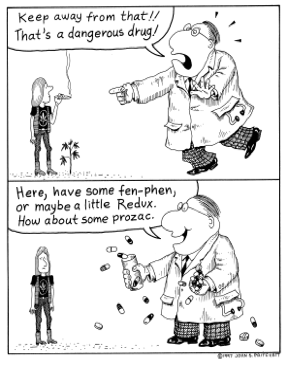
For Thursday, I asked you to read five short articles about drugs and alcohol. You may have wondered why I included these in a section on deviant minds. I think we all know that doing illegal drugs is considered deviant, to various degrees, and some of you may include alcohol in your personal definition of deviance. But I want to talk about drugs and alcohol from a different angle. How much is too much? How much consumption is "normal" and when does that cross over into too much? When is that too much considered fun, and when is it considered an illness, or a problem that needs to be fixed? Who gets to make those determinations?


If we were in class, I would ask you this question: is alcoholism/drug addiction an individual problem? Or a societal issue? As with the other topics we have discussed this semester, we have been sold an image in the United States that a person who drinks too much is sick. They can't help their consumption; it's a lifelong disease, with no cure.

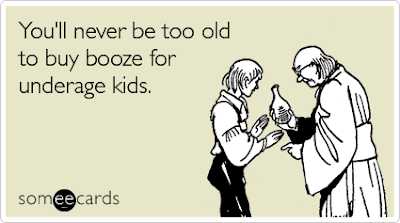
So then let me ask you this: is drinking deviant? Think about how deviance is a social construction, in how it varies by time, person, location and context. The same behaviors you exhibit at 21 (give or take), such as binge drinking, are charming--even expected--when you are a traditionally-aged undergraduate (especially if you are in Pullman). Is it always charming? Do race, class, gender, size, ability or sexual orientation make a difference in how "deviant" or not that behavior is perceived? What happens when your 64-year-old professor shows up and gets in line to do a keg stand? Is that same behavior now a little suspect? A little....problematic? What assumptions do you start making about that professor, especially if she's a woman (spot check: what gender did you have in your mind when I said "professor"?)? Has drinking always been considered a problem? Or is that a relatively new construction? Would the same level of consumption be seen as deviant anywhere in the world? Look at how we have regulated alcohol consumption over time, as discussed in the article about the drinking age. As with other categories (like race, gender, size, ability, et al.) we have discussed this semester, age is a social construction. What behaviors and abilities we correlate with which ages are a fluid construction of our making, and the debates around the drinking age show that well.


In the United States, and now around the world, we have an organization called Alcoholics Anonymous. They have done tremendous work to help people stop drinking when they find it is interfering with their life in various ways. In no way do I want to diminish the work they do. I would like you, however, to take a step back and look at how they have shaped our understanding of alcoholism. They, along with a broader social movement, have given a set of behaviors a name (label), and have really changed the way we look at that label. At this point in our history, you are far more likely to see sympathetic portrayals of alcoholics, struggling valiantly with a disease than you would have seen a generation ago. They have been part of an overall reframing of alcohol consumption being a medical issue--they are part of an example of medicalization, as we have discussed in this section. In a way, they have switched the view of alcoholism from being an achieved status to an ascribed status, at some level.
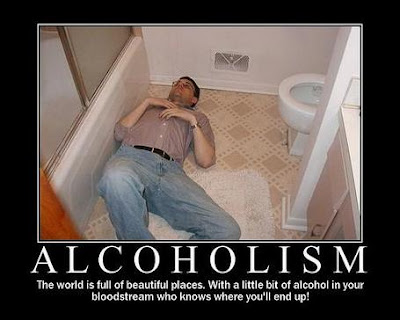


Right now, you could take an online quiz somewhere, and it would tell you if you are an alcoholic. We have a whole list of behaviors that we see as "symptoms" signaling a "problem." And, luckily, groups like AA can offer you a solution. Unlike many of the groups we have discussed this semester, they are not offering their solution to make a profit. But they have created almost a monopoly on the solution. It's their program, or you're not fixing your problem correctly--even the criminal justice system seems to agree, when they mandate attendance at meetings.



What is the consequence of that medicalization? Now that we have these clearly defined symptoms, we see certain behaviors as pathological. Before, maybe you got an eyeroll. Now you get a headshake, and a court mandate. We believe people that drink too much--or in certain ways--are sick. That is a social construction, created by a social movement. Their intentions are positive, perhaps, but it still has consequences. Once you are labeled an alcoholic, that becomes your master status. You know the story from here.

That pathologization has spread to drug consumption in similar ways. Though drugs have been handled differently in our laws compared to alcohol, they too have been medicalized in our culture. Just like you can go to an AA meeting, you can go to a meeting for Narcotics Anonymous, or Crystal Meth Anonymous. Name your "problem" drug, and there is a 12 step solution for you out there. For every drug, there is a support group saying "we know, you couldn't help it, but now we can help you."

There is a positive and a negative impact from this pathologization. It takes the blame off of the individual, in one way, but puts it right back on them with the label of "sick." Is that a fair trade off?



Is drug use a problem? If so, how much is too much? How should it be regulated? Who should decide when it is too much, legally, or medically? How, as a society, should we handle drugs? How have we reacted to the use of drugs we have chosen to make illegal? Are some drugs more deviant than others? Does the deviant label depend on your race, class, gender, ability, et al.?
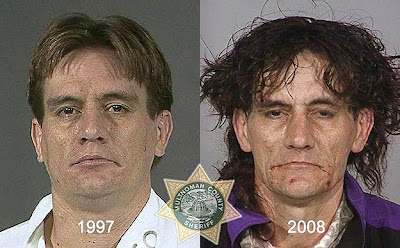


If you look at the billboards out there trying to stop people from doing crystal meth, they give a very particular message--don't use meth, because it will make you ugly. Are scare tactics the answer? If drugs are a problem, are scare tactics the answer? Research says that youth overestimate the impacts of cigarettes--they actually think they are more harmful than they really are. But that doesn't stop them from smoking. Smoking is cool, and youth often feel invincible.
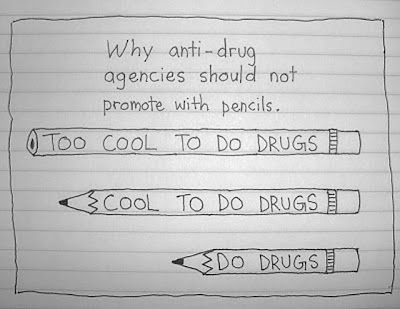


Is it ever deviant to not do a drug? Is there a pressure to participate in some consumption, such as alcohol or pot? Why is pot a controlled substance? Has it always been illegal? Why is it still illegal? Pot is a great example of a form of deviance being a social construction. It wasn't illegal in the United States. And then it was. And how it became illegal was largely based in politics and lobbying, not for medical reasons, or because of crime problems. To justify making it illegal, the culture had to reframe the way they thought about pot. They had to start seeing it as a "problem" that needed to be controlled, in the eyes of the public, and in the ears of the legislators. Some groups helped to make this happen by using propaganda, including the infamous film Reefer Madness (1938), filled with scare tactics (you've got to protect the children!).


If you really dig into the history of how pot became illegal, you will see it wasn't to help society, it was to make money. And they used racist insecurities and fears to turn the country against a substance they once enjoyed, or at least viewed as neutral.


Why does a society control alcohol and/or drugs? Do we need the government to save us from ourselves? Or is it because controlling alcohol and/or drugs helps society? Certainly, drugs and alcohol cost society, in car accidents, health care, and lost productivity taking away from our economy. But are there also benefits to the consumption of drugs and alcohol?

I gave you two readings about the social harm of drugs. What does the most harm? If we are really legislating drugs to help society, why are we not controlling the drug that causes more harm than all the others, by far--alcohol? Who has the best political lobbyists? Who stands to make money by alcohol sales? If pot could make that much money for some people, would it suddenly be legal? If marijuana had the same political power as alcohol, what would happen? Would it be legal? Could it not just be legal, but woven into our culture as the ultimate party device, as alcohol is?
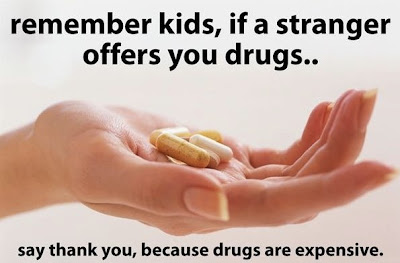


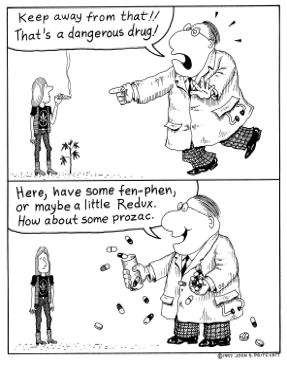
We have a twisted relationship with alcohol in our culture. We love it, it makes you sexy and cool, but don't drink too much....because that's sick. Why? Why are prescription drugs not treated the same way? Who can afford prescription drugs, and who can afford "street" drugs? How does that influence how we see deviance? Our definitions of deviance, when it comes to drugs and alcohol, are complex, and our messages often contradict each other.
February 27, 2012

Blog Post 4: Story of an Illness

For this section of the course, we are talking about how some people get labeled "sick" for the way their minds work. This is an extremely difficult topic, with much emotion and controversy wrapped up in those labels. It seems that some behaviors people used to shrug off as somewhere in the range of "normal" are now considered problematic. And some behaviors that used to be seen absolute as a sign of mental illness (like homosexuality) are no longer perceived that way (at least by most).

For some, getting a label of a mental illness has been life-saving and affirmative. Not only does it offer them an explanation for whatever symptoms they have been experiencing, but it also offers a chance at treatment. And, because we rely so heavily on insurance, receiving an official diagnosis is often a necessary step for getting therapy and/or treatment. Being given a label has also meant that individuals facing similar issues, barriers and concerns can form community together, and bond over their common experiences. With all of our technological advancements, we keep learning more about the body, and our brains--so are these new and expanded labels helpful? Are they getting us closer to the truth?

One of the downsides to getting a label of mental illness is the stigma that comes with such labels. Such a stigma is potent, because, as we have discussed about labels, they come with a whole package of assumptions. We see people with mental illnesses as "sick" but what else comes in that package--sick? Crazy? Unstable? Dangerous? What happens when your mental illness becomes your master status? Once you have been labeled, are you seen the same by society? Do you still have the same opportunities as everyone else? Or do your choices become more constrained?

One of my favorite examples of this quandary--should we accept this label or not?--is in a really fascinating story of Emanuel Frowner, from the outstanding podcast Radiolab. In the story of the Frowners, the father of the family refuses to believe that Emanuel has any problems, but his other son can see that Emanuel has textbook symptoms along the autism spectrum. Dad wants to avoid Emanuel being treated differently, but his brother wants him to get help--what is ultimately the best thing for Emanuel? The story is moving, and even the comments on the web site are telling about how difficult these decisions are. The clip is about 19 minutes, and is well worth a listen (sorry about the ad!).

There are also more sides to this discussion. For example, who stands to benefit from more widespread diagnoses of mental illnesses? Certainly, pharmaceutical companies stand to make enormous amounts of money from some diagnoses. As we have touched upon in class, there is much more money to be made in treatment than prevention. Does having the potential for profits change the way such companies look at medicine? Are these companies doing great work to solve our health problems, are they looking at more markets to tap, are they impacting policy in powerful ways, or or is there even more going on? What should be the role of drug companies in educating doctors, or the public, about medicine?


The Diagnostic Statistical Manual (DSM) is called "the bible" when it comes to diagnosing mental illness. The DSM-V is scheduled to be released in May 2013 and the process of updating it has been nothing short of intense. Right now at least 8 conditions considered "disorders" will be removed. Various groups have lobbied, protested or fought in a myriad of ways to get their illnesses labeled, so they can get health care, or removed altogether. And those groups are infighting with each other, because some want the label to access health benefits, and others are fighting the stigmas. Should this be how diagnoses are made? By political lobbies and activism, or are decisions made based on sound scientific evidence? And who pays for that scientific evidence--it really gets that messy. On top of everything, many of the people charged with updating the new DSM-V clearly stand to make a lot of money on the very changes they are voting on--should this conflict of interest, which impacts up to 70% of the panel members, be allowed?

For your fourth blog post, you will do your best to disentangle all of this in regards to an "illness" of your choosing. You can choose something that used to not be labeled an illness, but is now, or something that is no longer considered an illness. Or something that is currently going through a surge of awareness, and heightened diagnoses, like autism or ADHD (both of which we will begin to discuss in class). Really, it can be any illness you want to know more about. More than giving a history, you are going to give us an analysis of what has been involved in the process of this illness gaining, or losing, that label. You are going to tell us the academic story of that illness.

Choose something that has been deemed an "illness" either informally, or formally in the DSM. Not necessarily eyelashes--try to take on something with broader implications. Give a brief history of the diagnosis, or medicalization of that illness, then give a sociological analysis of the illness, using questions like these:
  • What were the behaviors or attributes that were seen as deviant, and how did they become seen as deviant/normal?
  • What was the process of medicalization (or demedicalization?) for this illness?
  • Who were the major players in the decision-making process, as far as you can find?
  • What parties stand to gain from the diagnosis?
  • What parties stand to lose from the diagnosis?
  • Are the people that will be impacted by the label part of the conversation, at all?
  • How did/does information spread about this illness?
  • What were/are the roles of social institutions in creating/maintaining the "sick" label?
  • What are the consequences (positive and negative) of having this diagnosis?
  • Are some groups more or less likely to be diagnosed with this illness?
  • What are the underlying social constructions of race, class, gender, size, ability, sickness, mental health, age, beauty, normal, deviance, sexuality, and so forth that impact this illness, and/or its perception?
  • Once this label is assigned, do we as society take any responsibility for the care of those who are labeled? Should we?
  • Who benefits from this illness being seen as an individual problem?
  • What are the possible social reasons for the existence of this illness?

A thorough post will include as many sides of the discussion as possible, to try to show just how complex this all is, and will do a really solid job of connecting to the concepts and materials from the course to their examination. My standards are only increasing; if you have any doubts, make sure you visit the writing center. At this point we should be past any typos or citation errors. Remember you must utilize and cite at least three of the assigned course materials, and you must EXPLAIN sufficiently how they connect to your analysis.

Not sure where to start? Here are a few suggestions, and some links to some places to start your thinking (also, of course, look at the required readings). Once you choose one, if you need some guidance, feel free to email me and/or set up a time to talk--I am always happy to bat around ideas with students. You will probably find you need to go back into the deviance blogs, so you can make sure you are getting a wide representation of perspectives and voices on the impact of these deviant labels (see the list on the right side of the page).

This is not necessarily reflective of what is "out there" but is just pulled from my personal collection I have gathered over the past few years of teaching this course.

Autism/Asperger's
ADD/ADHDGender Identity DisorderHomosexualityAlcoholism/Drug AddictionObesityDepression/Mental Illness (sorry to lump these--please be more specific in your own project)
Developmental, intellectual or physical disabilities (sorry to lump these--please be specific for your own project)
Sex AddictionViolenceBonus thoughts:

February 26, 2012

Section 4 :: Deviant Minds..? (Part II - after Spring Break)

After Spring Break we will be continuing our discussions on the social construction of "sick" and what we consider to be individual vs. societal issues.

For March 20, we will take a slightly different look at violence than we did at the beginning of this section when we look at the concept of self-harm. What happens when we want to turn violence inward, and cause ourselves harm? Is that okay? Should we be able to legally do whatever we want to our own bodies? If we do cause ourselves harm, is it because we are "sick" or is it a valid form of self expression? Is it the result of other social constructions around gender, and so forth? What causes some people to self harm? Are some people/groups more or less likely to participate in self harm? We will be talking about several types of behaviors that have been considered "self-harm" including cutting (and related behaviors), Body Integrity Identity Disorder and eating disorders.


We will complete this section on March 22 with a discussion on drug and alcohol use. Why are some drugs seen as "dangerous" while others are seen as viable recreational opportunities, with wide public support? With any drug, why does one level of consumption get perceived as "normal" (to varying degrees) while another level of consumption gets labeled as "sick"? Who gets to decide when you have crossed that line? What groups benefit from some drugs being made legal, and others kept illegal? Who gets to influence policy decisions? What are the advantages and disadvantages to seeing drugs and alcohol as a medical issues? What about seeing them as deviance? Which drugs, if any, should be controlled? Is that a medical, or criminological decision?

February 23, 2012

Section 4 :: Deviant Minds..? (Part I - up to Spring Break)

In this section of the course we are going to discuss mental illness in a few different ways. First, we are going to discuss behaviors (such as physical violence) that society seems to think of as individual psychological issues. Is violence the result of "sick" people, or is there something about our social constructions contributing? Then we are going to tackle the diagnosis of mental illnesses--what should be considered "normal" and what is "sick"? What are the advantages, and disadvantages, of being diagnosed as mentally ill? How have definitions changed over time? Are some groups more or less likely to be diagnosed as mentally ill?

In this section we will talk about the concept of medicalization. As I talked about in my last post, there is a lot of money to be made by cosmetic companies and the diet industry, if they can make you feel bad about yourself and sell you a solution to a host of socially constructed problems. Another group that stands to make a lot of money off of our "problems" is the medical industry, including pharmaceutical companies. Medicalization is the framing of socially constructed problems as "medical issues" so that the medical industry can offer a solution, through a diagnosis and/or treatment. Technological advancements mean so much good news--we now know so much more about the brain, and our bodies than we could have imagined. But some of those advancements have led to more categorization, and more placing of judgement on those categories. Sometimes instead of our body flaws being seen as a cosmetic problem, they get framed as a "medical" problem--that is medicalization.

For example, take eyelashes. Some people have short eyelashes, some people have long eyelashes. Have you ever thought of that as a problem? Whether or not it is a problem, there is a medical solution--you can get a prescription for a product to make your eyelashes glow. Commercials about this product medicalize eyelashes--they frame short eyelashes as a medical problem, which labels it first and foremost as a problem, and secondly, something that needs to be fixed. Good news: they can sell you the solution. Just go tell your doctor to write you a prescription.


For February 23, you are reading some different perspectives on physical violence:
  • Read the Fox and Levin article about serial killers, in your textbook.
  • Read the Kimmel and Mahler article about school shootings, in your textbook.
  • Read the Gilligan article "Shame, Guilt and Violence" available on Angel.

For February 28, continue reading about physical violence:


On March 1, we talk about violence when it gets turned inward and becomes self-destructive. Is suicide bad? Is it deviant? Is it noble? Should it be allowed, legally or socially? Who should be able to make those decisions?

Required:
  • Read "The Desire For Death" by Joiner, in your textbook.
  • Read "A Poet Crusades for the Right to Die His Way" by Fisher, available on Angel.
  • Read "Death With Dignity" by Dincin, available on Angel.

Optional:

  • Watch "The Suicide Tourist" (55:00). This is an episode of PBS's Frontline with the tagline "A story of struggling to live ... and deciding when to die. Is this a choice everyone should have?"

Watch The Suicide Tourist on PBS. See more from FRONTLINE.

On March 6, we start to tackle the problems with diagnoses. How do we decide what is normal vs. what is sick? Who gets to make those decisions? Categorizing a host of symptoms as a sickness comes with rewards and consequences--maybe you can finally get help, or your insurance will now pay for a treatment, or you can build community with others like you. But you also have to take on a label, and we devalue those we see as "sick" ...so what is the best option? Why are so many behaviors that used to be seen somewhere in the spectrum of "normal" now seen as "abnormal" and is that advancement, or policing? Why do some illnesses almost become a "fad" and suddenly surge in diagnoses?

On March 8 we will explore one particular diagnosis that has generated much controversy, Attention Deficit Hyperactivity Disorder (ADHD). We will discuss who is invested in seeing these behaviors as problematic "symptoms" and what the consequences are of the diagnosis. This will be preparation for your Blog Post 4 (details coming soon!).


Trailer for Generation Rx:

February 7, 2012

Blog Post 3: Deviant Blogging & The Importance of Language


Photo credit: http://vintage-ads.livejournal.com/3130862.html

Language evolves. The meanings of words change over time. In the image above, the word "gay" meant happy, and the rainbow did not have the same connotations it does now. Words, and how they are used, are another example of
social constructions. The meaning of the same word can vary over time, by location, by context, and by the person saying/hearing it.

For your third blog post, you will be looking at blogs written by people who have been labeled deviant, and you will teach us what they think about language. Not language in general, but how some words that relate to deviant labels have value attached to them. Some groups are asking us to stop using certain words (such as "the r word"), while other groups are reclaiming (often called reappropriating) words (such as "queer"). For your post, you will research the history of a word or phrase, and find out deviant bloggers (members of deviant communities) are saying about that word. These words or phrases could have come from identities or assumptions about gender, race, class, sexuality, gender identity, occupation, ability level, size, or anything else that marks a person or group as "other" from the default.

If you think about most of the insults we throw around at each other, they can often be traced back to a group or status that is considered "deviant" in our culture. When we do not like something, we may call it "lame." That word, as innocuous as it seems, has a meaning--to be lame is to have difficulty walking. So when you say something is lame, you are referring to a physicality that would fall under the umbrella of disability.


Think about the word in the image above--gay. To be gay meant to be happy (well, it still does), but in the 1940s (according to the Online Entomology Dictionary) it started to also be used as slang for homosexual. If you look at the word "gay" now, it is a pretty safe word to use to talk about someone who identifies as a gay male--and in fact is considered "more updated" language than calling someone homosexual. But some members of the LGBTQ (lesbian, gay, bisexual, transgender, and queer/questioning) community feel that calling anyone in the community "gay" is lumping everyone together too much, because it erases gender and individual identities (such as lesbian, and bisexual) and one's gender identity (e.g. being transgender) has NOTHING to do with their sexual orientation (such as gay, lesbian or bisexual). You also very frequently hear "that's so gay" used as an insult, so there are several campaigns asking people to stop using "gay" in a negative way. So for some people, "gay" has been reclaimed as a positive word. But for others, "gay" should only be used to describe gay men, and is otherwise insulting, and for others still, "gay" should only be used in reference to someone's sexual identity, and only in positive or neutral ways.


We have read (or will read) two articles that may help get you thinking about the emotions and power behind language: the article by Kelly Osbourne, and the post about ableist language. There are articles and debates all over the blogosphere about reclaiming words, such as this post about reclaiming the word "slut" and this encyclopedia entry on the reclaiming of "Jesus Freak" among Christian youth.

For your blog post, choose a word or phrase that is currently, or has been, used in the United States an insult that refers to a group that is perceived as deviant. You have seen examples in class, or you can listen around for ideas, or feel free to come talk to me. You could also start here.

Once you have chosen the word or phrase:
  • Explain the history (entomology) of the word or phrase. Some words will be easier to research than others--do the best you can.
  • What used to be the connotations?
  • What are the current connotations?
  • Who is more or less likely to use this word or phrase?
  • What are the underlying social constructions in that word or phrase?
  • What communities are impacted by the use of this word or phrase?
  • How do members of the relevant communities feel about the word or phrase? Are some people reclaiming the word? Are others asking us to stop using the word?
  • Is it a word that is more or less acceptable to use if you have a certain deviant label (you are a member of that community)? For example, in the LGBTQ community, some people use words like "fag" or "dyke" to describe themselves or others in the community. If you are not part of the community, however, you may be sanctioned for using those words--at the very least, those same words may be seen as insulting.
This is not meant to be exact checklist or outline for your paper, but you should find a way to answer each of those questions in your thoughtful, academic analysis.

Explore the Deviance Blog List on the right side of this screen for ideas, and for research into the power of the word/phrase on the communities impacted. These blogs may not give you the exact information you need, but can hopefully get you started and thinking in your search.

Remember, blog posts should be between 600 and 1500 words, and citations are necessary. See blog post tips, if you do not remember. You must also integrate and cite at least THREE of the assigned readings/sites/videos from the course materials.

Note: as we will be learning, some of these words are very loaded! You are wading directly into controversy, insults, and people's humanity. Please be respectful in your analysis, and how you choose to discuss the word or phrase in your blog. People may stumble across your blog, and it is not our goal to traumatize anyone--be kind, compassionate and professional.

February 3, 2012

Section 3 :: Deviant Bodies (Part II: Feb 14, 16 and 21)

For the last three days of this section, we are going to be discussing other types of deviant bodies. We are going to discuss our obsession with size, and the beliefs we have about overweight bodies. Then, we are going to discuss bodies that are seen as disabled, and the limits of our beliefs about what constitutes "ability" and "disability."

As with all of the groups we discuss this semester, members of the fat and disability community are both challenging us to think about how we define "normal." In our images of ideal men and women, we have very specific ideals for what we think bodies should look like, and how they should function. If you look around, you will see that almost all aspects of our culture is based on an assumption that we meet the ideal, or pretty close. Look at the classrooms on campus--do the chairs, desks and rows make assumptions about your body size and shape? What are they assuming about your physical abilities? Next time you go to a store, look--would you be able to get into the store, if you were in a wheelchair? Does the layout of the store make assumptions about your body, in size and ability? If they sell clothing, do they sell clothes that would fit any type of body, based on size or ability?

Both weight and ability are a master status, so when you are not the ideal size (which has nothing to do with averages, or reality), or have a visible disability (which has nothing to do with your actual capacity), you are seen first and foremost by that status. Your actions and words get put through the filter of assumptions we have about fat and disabled bodies. For example, in both communities, there is a perception that when you are fat or disabled, you are asexual. Mainstream society has a hard time believing you can be attractive, attracted and sexual. You are considered deviant if you want to have sex with someone fat or disabled. Why? What are the underlying assumptions and social constructions? How does this relate to our ideas of "ideal women" and "ideal men"?


On February 14, we will talk about fat bodies (I use the term "fat" in reference to the fat acceptance movement). We will ask where our beliefs about people who are fat come from, what that means for the lives of those who receive the "fat" label, and the consequences of the stigma that comes with that label.

Required:


On February 16, we begin talking about people with disabilities, and our assumptions behind that label. What constitutes "abled" or "disabled" and who gets to choose where to draw the line between those two labels? Some people get from point A to point B by walking. Others roll. Who says one way is better? How does all of this work with our images of the ideal man and woman? What are the consequences of being labeled "disabled" in our society? What do we think we know about people, based on their disability as a master status?

Required:


On February 21 we will finish this section of the course by watching the film Murderball and completing our discussion of what it means to be able-bodied. Be excited to see this documentary--not only will it blow you away, but the star of the film Mark Zupan will be coming to WSUV as the Marquee Diversity speaker on March 7! Here are the details. Reserve your seats now!

Required:


Bonus: Mark Zupan in Jackass Number Two!

February 2, 2012

Section 3 :: Deviant Bodies (Part I: Feb 7 & Feb 9)

Now we begin the part of the class I enjoy the most! For the rest of the semester we are going to take on a new topic every day or two. It is going to move FAST, and you are going to have to read/watch quite a bit, but it is worth every moment of your time. Be ready for interesting class discussions--bring your questions and your perspective, and be prepared to talk!

Here are some definitions from the WSU Gender Identity/Expression and Sexual Orientation Resource Center (GIESORC) to help you navigate the rest of the discussions on gender and sexuality. Be sure you know these terms!


For
Section 3 of the course, we are going to spend 2.5 weeks talking about Deviant Bodies. As we will discuss this semester, some people are labeled "deviant" because of their actions, and some people are labeled because of their identities. In this section, we will be learning about and discussing people who have been labeled "deviant" because of something about their body or embodiment.

On February 7, we will begin this conversation by learning about how the concept of "sex," just like gender, is a social construction. We have been raised to believe that sex is simple--there are men and there are women, there is a penis or a vagina. As you will read, and we will watch and discuss, it is more complicated than that. If you take all of the components that scientists use to determine "sex" we find out that male and female are umbrella terms for all sorts of possibilities. As the image below suggests, instead of thinking of things like gender, sex and sexuality as binaries, it can be useful to see them each as a separate continuum. Be sure to read Biologist Anne Fausto-Sterling's short and fascinating article on sex and intersex conditions (you will notice she uses the terminology hermaphrodite--that is now outdated). Fausto-Sterling has written several interesting books on the topic, if you are interested, including the wonderful Sexing the body: gender politics and the construction of sexuality.

Image source: http://itspronouncedmetrosexual.com/2011/11/breaking-through-the-binary-gender-explained-using-continuums/

Required:

  • Read The Five Sexes: Why Male and Female Are Not Enough by Anne Fausto-Sterling (available on Angel).
  • Read Alice Dreger, Gender Bender by Danielle Magnuson on the Ms. Blog.
  • Spend some time exploring the Intersex Roadshow blog to read the stories and words of some members of the Intersex community.
  • Watch the 2:48 clip called Reteaching Gender and Sexuality, shown below. It was made by youth in the Seattle area, and they are asking us to rethink the way we categorize, label and (de)value gender and sexuality.
  • In class, we will be watching the HBO documentary Middle Sexes: Redefining He and She. The film explores the limits of a male/female binary by discussing transgender children and adults, the intersex community, and members of third genders in various parts of the world.

NOTE: Remember you need to complete a film review after each film we watch in class. See you syllabus and the Film Review blog post for details!


On
February 9 we will continue talking about the limits of the gender binary with our exploration of the transgender and gender non-conforming communities. We will first read an except from activist Leslie Feinberg's book Transgender Warriors to give you a little history on transgressing the gender binary. We will then read several articles with varying perspectives on aspects of the transgender community, and watch a clip on the history of "Gender Identity Disorder" as a mental illness. We will discuss more about the DSM and mental illness in Section 4 of the course.

Some concepts to think about when we discuss transgender issues, especially in how they are often framed as a mental health issue, are achieved and ascribed statuses. As we have discussed, we all have a host of statuses, including our master status. All of us have
achieved statuses (social positions we have "earned" or for which we have been chosen, such as our education status or status as criminal), as well as ascribed statuses (the ones we are assigned at birth, or assumed involuntarily, such as age, race or class). How do we treat people differently, based on if we assume their "deviance" is an achieved or ascribed status? Think about this example: in U.S. surveys, when respondents are asked if they think being gay is a choice, or an inborn trait, those that think it is inborn are more likely to support gay rights. Are we more forgiving when we think someone "can't help" their deviant status (ascribed, instead of achieved)?

Also think about
language. People who are marginalized or seen as deviant in the culture are often told they need to "get a sense of humor" when they do not like being the butt of a joke, or dehumanized. Think about terms like "fag", "you're so gay", "tranny" or "that's retarded." Are those just innocuous phrases, or do they reproduce deviant statuses?

Required: